
Knowing when to repaint your home is not always obvious. Some signs are subtle, while others appear suddenly after a long, hot summer or a wet winter. Repainting at the right time protects your home from damage, extends the life of your cladding, and can save you from major repairs later. This guide covers the key signs to look for and what they mean for homeowners in Auckland.
Why Exterior Paint Fails in Auckland’s Climate
Auckland’s weather is harsh on exterior coatings. A mix of strong UV, rain, humidity, coastal air, and constant temperature changes put stress on paint systems year-round. Understanding why paint fails will help you spot problems early.
UV exposure on north-facing elevations
North-facing walls take the brunt of the sun. Over time, UV breaks down the paint film, causing fading, chalkiness, and reduced protection.
Salt, moisture, and coastal wind
Homes near the coastline or exposed to prevailing winds experience more salt build-up and moisture. These accelerate paint degradation and can lead to mould, staining, and peeling.
Thermal movement in timber and plaster
Weatherboards and plaster expand and contract with temperature changes. This movement stresses the paint film, and weak or old paint can crack as a result.
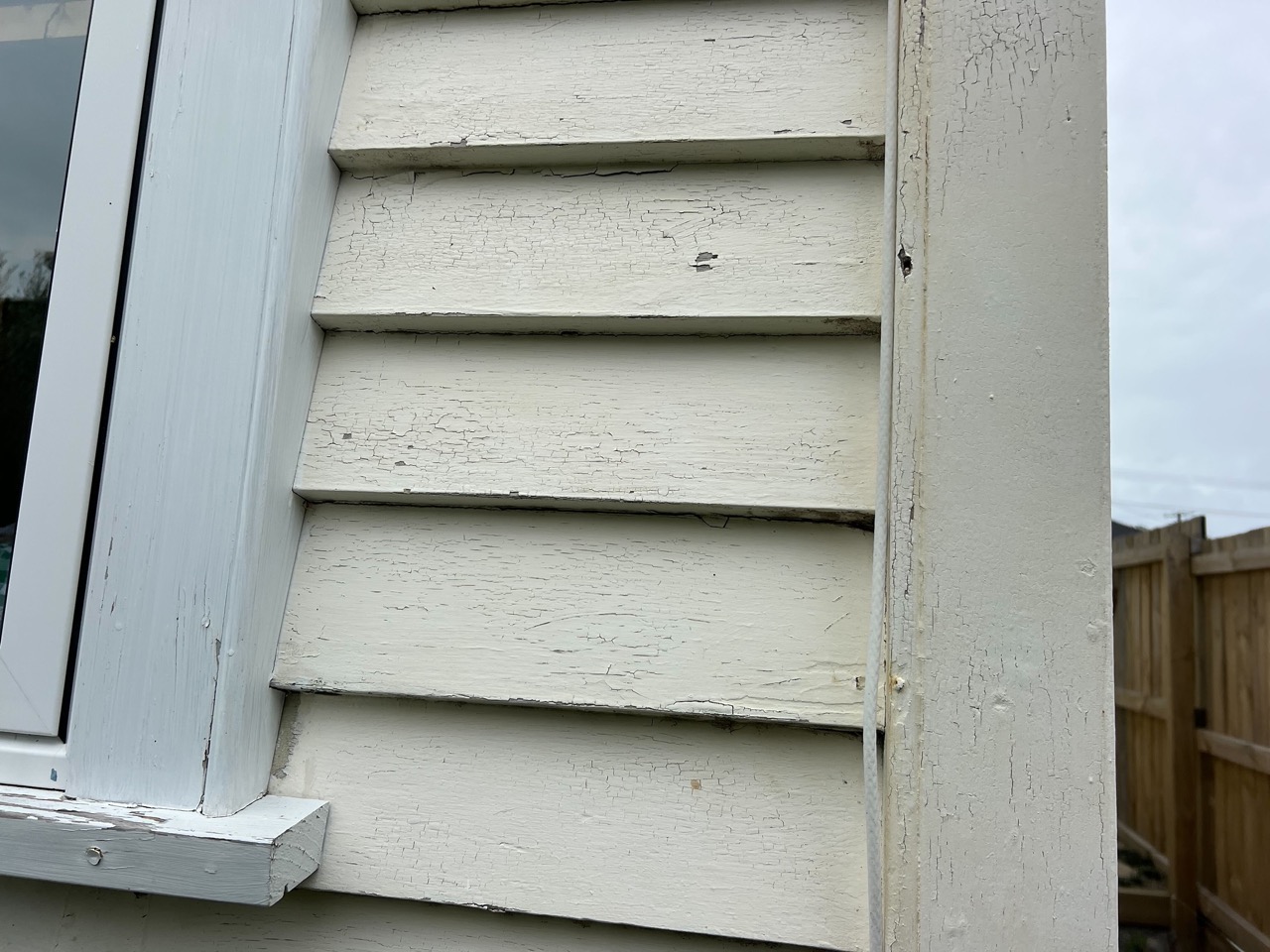
The 8 Warning Signs It’s Time to Repaint
Below are the most common indicators that your home needs attention. Each one tells a story about the condition of the surface beneath the paint.
Fading or chalky paint
If rubbing your hand across the paint leaves a powdery residue, UV has broken down the coating and it’s no longer properly protecting the surface.
Cracking, flaking, or peeling
This indicates a loss of adhesion. If ignored, moisture can get in and cause swelling, rot, or plaster damage.
Hairline cracks in plaster surfaces
Small cracks allow moisture to enter and sit behind the coating. This can eventually lead to larger cracks or complete coating failure.
Timber movement or exposed bare wood
When bare timber becomes visible, the protective layer is gone. Moisture can reach the wood and increase the risk of decay.
Mould or mildew growth
Some mould wipes away easily. But if it returns shortly after washing, it may indicate deeper moisture issues or compromised paint.
Stains or discolouration that keep returning
Persistent stains often point to moisture ingress or substrate deterioration, not just surface dirt.
Paint no longer responds to washing
If washing no longer restores colour or appearance, the paint film has aged beyond recovery.
It’s been 7–10 years since the last repaint
In Auckland’s climate, most homes fall within this repaint cycle. Some claddings last longer, while high-exposure homes may need repainting sooner.
When You Should Repaint vs. When You Need Full Stripping
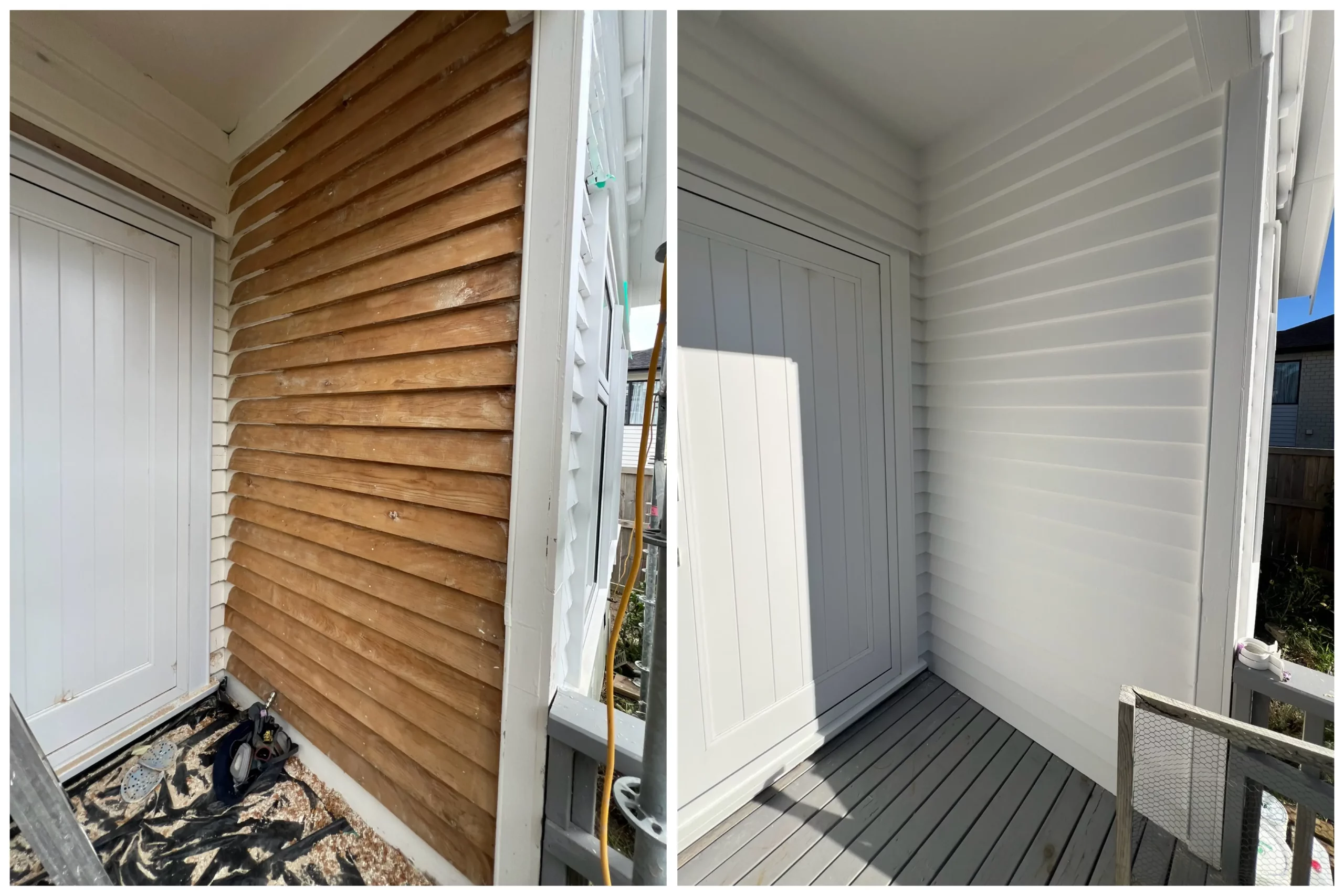
Understanding the difference between a standard repaint and a full strip is important, especially for owners of older homes. Repainting is suitable in many cases, but older bungalows and villas often have deeper issues caused by decades of accumulated paint layers.
When repainting is enough
A repaint is usually fine when the existing coating is still sound overall. Even if the surface is faded, chalky, or showing minor isolated failures, the underlying system is stable. With the right preparation — washing, sanding, spot-priming, and repairs — the new coating bonds well and performs as intended.
When full stripping becomes necessary
Full paint stripping is most often required on older homes, especially the typical weatherboard bungalows and villas you see in suburbs like Mt Eden and Ponsonby. These homes often have many generations of paint built up over decades.
Paint has a natural lifespan, and each time a new coat is applied, it adds weight and tension to the underlying layers. Over time, those older layers become brittle and lose flexibility. Eventually, they let go and begin to delaminate (lift and peel away from the timber).
If several areas of your home are showing delamination, it’s usually a sign that the entire coating system has reached the end of its life. In these situations, stripping back to bare timber before repainting is the only reliable long-term solution.
Why stripping is a big investment — and why it’s sometimes unavoidable
Stripping is a very big cost because it is detailed, labour-intensive work. It is not included in a standard painting quote unless there is clear evidence of widespread coating failure. But when old paint is peeling in layers across the home, repainting over it will only fail again — often within months. Stripping ensures a stable, long-lasting foundation for the new coating system.
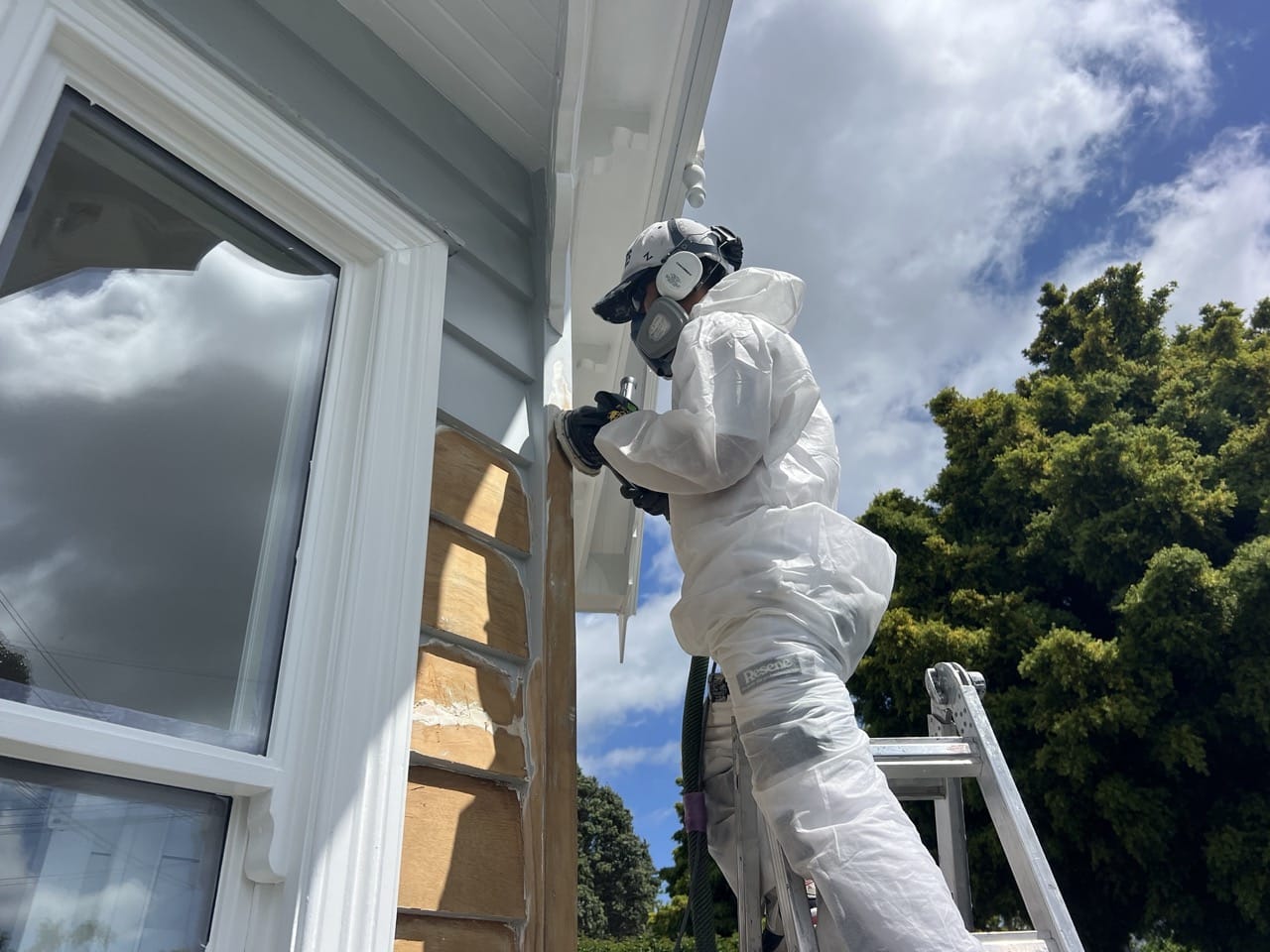
How to Extend the Life of Your Exterior Paintwork
A few simple habits can keep your home looking fresh and reduce long-term maintenance costs.
Annual or biannual house washing
Removing salt, dust, and mould stops contaminants from damaging the paint film.
Timely maintenance and spot repairs
Fix small cracks, failed sealant, and bare patches early. Delaying repair increases the cost later.
Choosing quality coatings and correct system
A good paint system matched to the cladding and environment lasts longer, performs better, and protects your home more effectively.
When to Call a Professional Painter
If you’re unsure about the condition of your paintwork, a professional inspection can save guesswork. Auckland City Painters can assess your exterior, check for underlying issues, and provide a clear scope of work. Using a Registered Master Painter offers peace of mind that preparation and application meet industry standards. You also receive a complimentary in-house Resene colour consultation when booking a full house painting service.
Final Thoughts
Not every sign means your home needs a full repaint immediately, but small issues can become bigger ones if ignored. Spotting early signs of wear is the best way to avoid costly repairs and extend the life of your cladding. If you’d like an assessment or advice, you can get in touch any time for a clear, honest evaluation of your home’s exterior.